Over the last couple months we've all studied and reviewed quite a few things. In English, we have studied the sociological and philosophical approaches to analyzing literature, and even what it is that makes a piece of literature have any value to it. Sometimes I think, "Where the heck did that analysis come from and who cares!?" Why do we have to read some of these novels or poems that English teachers have us read? What does it matter to us? Over this past school year it all finally clicked. It is true that I still find doing a math problem more entertaining than writing an essay, but thanks to this past year I can finally say that I understand why we read what we read and what value literature really contains. Now, whenever I see a poem I can pick out all of the archetypes and allusions and see the poem in an entirely new light. When I see an analysis of a piece of literature, instead of arguing that the analyzer just made a bunch of "crazy" stuff up that sounds nice, I agree with the analysis and use it to help me continue finding much of the piece's value. So, what is the value of literature and why are we reading and studying it? I have found that for me, above all of the points and arguments being made or beliefs given, literature is a very valuable tool in helping me to think. Now that I am aware of it, as I think back over all my schooling years I can see that after reading and understanding any piece of literature with any value to it, I have used it as a vehicle for thought. I debate with myself about what my own opinion is on the subject being discussed and compare it to everyone else's. I have always just thought that literature had no real purpose other than entertaining those who actually enjoyed reading it, but finally, just as I am about to leave high school, I can see that it does have a purpose. It helps us to think and ponder, to value and consider others opinions, and ultimately to become more enriched people. Thank you Mrs. Elliott! :)
Chad L.
Sunday, May 15, 2011

Monday, April 18, 2011
The Perspective & South Park Strikes Again
Everyday I hear many complain, "My life is difficult", "Money is a problem", "He/She won't give me the time of day", "I got rejected", "My parents got laid off" etc etc. Now, no one's life is perfect and life can suck. That is just life. One will always have there up and downs, day in and day out. One must appreciate what they have cause it can be worse. At least you are not living in a poverty filled city. Or you don't have to worry about food, water, and shelter. Or at least there is a hospital conveniently located a short distance away. The sooner one accepts this fact, the sooner they can get over their problems. Just look at things from a different perspective and your life will be better.
Recently I watched an episode of South Park that really caught my eye (as well as my funny bone). It was on the novel Catcher and the Rye. The boys decide to write a novel that would make it into the literary cannon. Their book's foundation laid on being vulgar and disgusting. In fact while reading the novel, one would vomit! The book became a hit. Why? Cause through the vulgarity the readers found literary merit in the novel, although the boys never intended in the reader finding anything! The point it made was that English enthusiast may look too deeply into a novel. How do we know if an author is actually writing a book for the plot to have a deep meaning? The study we are doing on literary merit made me think about this. I have never actually seen or heard of these "literary cannon" authors saying that their novels are meant to be researched and essay worthy. Maybe the authors are just trying to make a little dough or even just trying to write for fun? I'm not saying that ALL the books we read don't have a theme that is meant to be looked at and researched, but maybe we are scratching too deep at the surface of these novels; in fact so deep that we actually desolate the author's original purpose of having their book read- for the reader to enjoy themselves and jump into another world.
-just my 2 cents, Sasan.
Recently I watched an episode of South Park that really caught my eye (as well as my funny bone). It was on the novel Catcher and the Rye. The boys decide to write a novel that would make it into the literary cannon. Their book's foundation laid on being vulgar and disgusting. In fact while reading the novel, one would vomit! The book became a hit. Why? Cause through the vulgarity the readers found literary merit in the novel, although the boys never intended in the reader finding anything! The point it made was that English enthusiast may look too deeply into a novel. How do we know if an author is actually writing a book for the plot to have a deep meaning? The study we are doing on literary merit made me think about this. I have never actually seen or heard of these "literary cannon" authors saying that their novels are meant to be researched and essay worthy. Maybe the authors are just trying to make a little dough or even just trying to write for fun? I'm not saying that ALL the books we read don't have a theme that is meant to be looked at and researched, but maybe we are scratching too deep at the surface of these novels; in fact so deep that we actually desolate the author's original purpose of having their book read- for the reader to enjoy themselves and jump into another world.
-just my 2 cents, Sasan.
Monday, April 4, 2011
Sprint to the Finish
My high school career is coming to an end in a very different way than I imagined as a freshmen. Four years ago I was still a gymnast. I spent four to five hours a day working at that sport. Many people don't know that gymnastics was terribly stressful and often brought me to the brink of giving up and taking up something else. Something less... five-hours-a-day-ish. I got through freshman year, and sophomore year was a new challenge as I had my first two AP classes coupled with my gym schedule. It was horrible. But I still came to school with the same, if not sleepy, sarcastic enthusiasm everyday. Humor was and still is a way to vent my frustrations and need to be honest, and get a few laughs out of it too. As I entered my junior year, my schedule was overwhelming. I fell asleep behind the wheel and crashed. I fell asleep in literally every class at least once... or everyday (sorry Beckler). It made me question why I was doing it all. Did I really love gymnastics that much. Or was I just doing it for my father who was also a gymnast. I was really good at convincing myself gymnastics was my sport and mine alone. But I really didn't love it. It made me strong and gave me the incredibly useful ability to back-flip at any given time which has yielded so much free stuff over the years its not even funny. In the summer before senior year I decided to tag along at the cross country summer practices. This was the first time I had really done any other sport besides gymnastics. And I loved it. I ran slower than most of the girls team at the time, but I loved it. I was still in gymnastics at the time and I would come to practice already dead tired and my coach would chew me out. But I didn't care. When money became a little tighter, with college expenses looming just around the corner and other expenses cropping up, I decided to tell my father that I thought we should stop gymnastics. At that moment, I realized that gymnastics wasn't my sport. It was my father's. I said "we should stop" for crying out loud. He took it harder than I did. I committed my time to cross country and found that I loved every minute of it. The team was much closer than my gymnastics team. I felt like part of a team for the first time. This was something I chose one my own. It was mine and no one else's. I started senior year with a renewed spirit. I still spent about four hours with sports in the form of running and weight room, but it wasn't nearly as stressful. I often relate my sports to my general thinking. I had regarded gymnastics as the most honorable and toughest sport, and that I was a bettering myself for enduring it. But what I realize is that people must find out what they love on there own, with no one else's opinion. Trust me. you'll be happier for it. The four year race is on its bell lap. This is it. I'm in the final stretch and its the most exciting part of this race. And I think I'm coming out ahead.
Some Thoughts on "The Poisonwood Bible"
Well, guys, in case you didn't notice, I like COLOR. It's my "One Little Word." Go figure. So I just had some thoughts about The Poisonwood Bible that I wanted to share...
- Anyone notice the frequent reference to blood oranges? Blood, well that's a symbol in itself. But why would Kingsolver choose blood oranges over regular oranges or tangerines or something?
- Speaking of blood oranges, Ruth May saw lots of boxes of diamonds in Eeben Axelroot's plane. Hmmm...diamonds in Africa...blood diamonds? Makes sense, right? I haven't seen that movie with Leonardo DiCaprio, but nonetheless, I do know a little about them.
- Adah and the lion: "...signs of stalking, the sign of a pounce, and a smear of fresh blood trailing into the bush." Well, I sure thought Adah was killed by the lion. I didn't expect Kingsolver to throw in "a yearling bushbuck." (Ooohhhh, high literary merit right there.) I was confused after that chapter cause I wasn't sure if Adah was dead or not. But nonetheless, why did Kingsolver choose to have Adah have a scare with a lion? Why not the snakes that are constantly mentioned?
- Summary so far...blood, blood, blood.
- Ruth May falls out of a tree and breaks her arm. No blood, no lions, no snakes. Why? Why did Kingsolver not continue the trend of blood with Ruth May's arm?
 |
| Leonardo DiCaprio in "Blood Diamond" (2006) |
"Cheating" on Annotations?!
(Don't be mad, Mrs. Elliott. It's not what you think. Haha.)
Yeah, I somehow managed to cheat the system. I started reading The Poisonwood Bible over spring break. I only got to page fifty or so and unknowingly, I annotated everyone's chapters up to that point. Then, Mrs. Elliott told us to choose one character's chapters to annotate. I chose Leah Price's. After reading all of Genesis, I was really enjoying the novel. And I thought, "Wow. It sucks that I can't just read this book. I have to annotate while I read." Obviously, I noticed Orleanna Price only had two chapters in Genesis and The Revelation. Well, if someone chose to annotate those parts, that would be fairly easy. Though Orleanna's chapters are the most dense, there's only two. Easy. So I decided to change from annotating Leah to annotating Orleanna. Then, I was able to just read The Revelation. I was able to stay focused (because this is a novel I am actually interested in) and I enjoyed the book that much more.
So I want to know, why did you guys pick the character you did to annotate for the first part of our reading? And how are you liking The Poisonwood Bible so far?
-Shelby F.
Yeah, I somehow managed to cheat the system. I started reading The Poisonwood Bible over spring break. I only got to page fifty or so and unknowingly, I annotated everyone's chapters up to that point. Then, Mrs. Elliott told us to choose one character's chapters to annotate. I chose Leah Price's. After reading all of Genesis, I was really enjoying the novel. And I thought, "Wow. It sucks that I can't just read this book. I have to annotate while I read." Obviously, I noticed Orleanna Price only had two chapters in Genesis and The Revelation. Well, if someone chose to annotate those parts, that would be fairly easy. Though Orleanna's chapters are the most dense, there's only two. Easy. So I decided to change from annotating Leah to annotating Orleanna. Then, I was able to just read The Revelation. I was able to stay focused (because this is a novel I am actually interested in) and I enjoyed the book that much more.
So I want to know, why did you guys pick the character you did to annotate for the first part of our reading? And how are you liking The Poisonwood Bible so far?
-Shelby F.
Tuesday, March 29, 2011
Philosophy in Invisible Man
In class, we have been researching different philosophies and are comparing those ideals to novels we have read in class. I read Invisible Man, and found existential beliefs to have a significant part in the meaning of the novel. Existentialism is based around the individual, and follows that a single person controls the outcome of their life. The father of existentialism, Kiekegaard, highlights the importance of the "single individual" and personal choice. These values clearly relate to the narrator in Invisible Man, who throughout his whole life was pushed around and told what to do and what to believe. He had no individuality himself; while a part of the Brotherhood, he had to preach the beliefs the Brotherhood had, without the ability to throw in any personal thoughts. He was merely their puppet. By the end of the novel, the narrator began to realize he did not know who he truly was, and therefore ended up underground with tons of lights, mentally making himself seen and stand out. It was here where he found his individuality and began to make his own choices, knowing from past mistakes of trusting the wrong people, that he was the only one he could entrust his future to. This finding of himself gave his life meaning and a purpose, therefore falling under the existentialist philosophy.
Taylor C.
Friday, February 25, 2011
INVISIBLE MAN POEM
What defines invisible?
Can it be metaphoric or
must it be literal
To be invisible
seems like you'd be miserable
metaphoric or literal
One can still be invisible
whether it is metaphorically
or literal
the point is anyone can feel invisible
We as individuals
define what is invisible.
This is my poem on Invisible Man comparin and contrasting what defines invisible and how one can be invisible metaphorically and literally. This relates to the character in Invisible Man because he feels he is invisible and at the end of the novel his invisibility takes a turn to leave him as a permanent outcast leavin him truly invisible.
Can it be metaphoric or
must it be literal
To be invisible
seems like you'd be miserable
metaphoric or literal
One can still be invisible
whether it is metaphorically
or literal
the point is anyone can feel invisible
We as individuals
define what is invisible.
This is my poem on Invisible Man comparin and contrasting what defines invisible and how one can be invisible metaphorically and literally. This relates to the character in Invisible Man because he feels he is invisible and at the end of the novel his invisibility takes a turn to leave him as a permanent outcast leavin him truly invisible.
Thursday, February 24, 2011
A Black Man's View
I'm reading Invisible Man, just like many of you. A while back in the first chapter, there was a section which stood out to me and made me think. Here, the narrator speaks of his grandfather, who on his death bed told him, "I have been a traitor all my days," and when speaking about the whites said "overcome 'em with yeses, undermine 'em with grins, agree 'em to death and destruction." The narrator reports that this is a huge difference from the point of view and character they believed this man had. I believe the grandfathers reasoning and intent was strange, but sound. I think that the white people of that time actually expected the blacks to act more unsophisticated, even animalistic, compared to themselves. The grandfather did what they (the whites) proclaimed to want, which was being black and acting happy with his lot in life and acting civily. However, the grandfather knew that deep down the whites' actual desires were different, even if they didnt know it themselves. He beleieved they wanted the blacks to act poorly so that they could have a large group of people to look down upon (humans are selfish in nature). So, the grandfather acted how the whites proclaimed they wanted him to act, not because he was trying to be good, but because he was completely rebellious, wanting to undermine them in a new form of rebellion.
-Chad
-Chad
Thursday, February 3, 2011
Invisible Man Introduction (Rewrite)
Hello Everybody!
Tell me what you all think about this rewrite I wrote on Invisible Man's introduction. Thanks in advance.
"I am the struggling soul. No, I am not a sufferer like those given charity by the American Red Cross; nor am I one of your orphanage dwellers. I am a soul of pride, of success and goals, dreams and ambition- and I might even be said to work hard. I am struggling, understand, simply because I have neared the point of give up. Like the down-in-the-dumps one sees on the streets, it is as though I have been attacked by swords of negative disappointing energy. When I question myself, I ask only my inhibition, itself, or follies of my injuries- indeed everything and anything except me."

 -Sasan
Tell me what you all think about this rewrite I wrote on Invisible Man's introduction. Thanks in advance.
"I am the struggling soul. No, I am not a sufferer like those given charity by the American Red Cross; nor am I one of your orphanage dwellers. I am a soul of pride, of success and goals, dreams and ambition- and I might even be said to work hard. I am struggling, understand, simply because I have neared the point of give up. Like the down-in-the-dumps one sees on the streets, it is as though I have been attacked by swords of negative disappointing energy. When I question myself, I ask only my inhibition, itself, or follies of my injuries- indeed everything and anything except me."

Monday, January 24, 2011
Relating My "One Little Word" to "Jane Eyre"
For my one little word I wanted to pick something unique. I wanted to pick something that nobody else would pick. During my first stage of brainstorming, I started with some of my favorite words or words that make me happy. My list in my composition book looked like this...
-Sunshine
-Love
-Color
-Perfection
-Friend
-Journey
-Luck

Color Symbolism Website (Scroll down a little to find the "Color Symbolism Chart" on the left side of the page)
For those of you reading Tess, does color symbolism play a role at all? (In class we already talked about the baptism of the baby and Tess's white nightgown). Are there any other pieces of literature you have read that use color symbolism?
-Shelby F.
-Sunshine
-Love
-Color
-Perfection
-Friend
-Journey
-Luck
I had already brainstormed ideas for my top words (the ones listed in colors above). If I chose "friend," when we did an art project I would use a picture of a dog. And If I chose "luck," I would use the story of my late grandfather. However, in the end I chose the word COLOR. My table group and I agreed that it suited me well (after all I still love to color and do arts and crafts). So now it's time to connect it with Jane Eyre...
 |
| My cousin's dogs and me in Illinois during Summer 2010. |
One would think that connecting Jane Eyre with the word COLOR would be a little difficult. While reading Jane Eyre tonight, I decided to take a break and comment on other teams' blogs. Then the idea just hit me. So here I am, being an overachiever and writing my blog one day early. Haha. Anyways, I only thought about my idea for about five minutes before I decided to turn it into this blog. At Lowood School, the school Jane attends and where she eventually teaches, Mr. Brocklehurst emphasizes conformity. All of the girls must look and dress the same. In addition, throughout the book Jane compares her plain clothing that she has from Lowood to the elegant "crimson velvet robes and shawl turbans of some gold-wrought Indian fabric" (Chapter 17) of the Eshton and Ingram families. However, in Jane Eyre, color is also important in the detailed descriptions of Gateshead, Lowood, Thornfield Hall, and Morton. One of my favorite descriptions in the novel occurs in Chapter 9 when Jane describes the garden at Lowood during the spring. I can almost see "the borders of the little beds that were gay with pink thrift and crimson double daises." In addition, color is also important in the description of the red room at Gateshead in Chapter 2.

My word, COLOR, also had more of a connection to literature than I originally thought. I knew of color symbolism from English I and II but the concept skipped my mind when I picked my one little word. Here is a website all about color symbolism:
Color Symbolism Website (Scroll down a little to find the "Color Symbolism Chart" on the left side of the page)
-Shelby F.
Sunday, January 23, 2011
Imperfection in Tess
“And it was the touch of imperfect upon the would-be perfect that gave the sweetness, because it was that which gave the humanity.”
-Tess Pg. 150
In unknowing eyes, Tess seems perfect and innocent, embodying purity at its fullest. When Angel Clare saw Tess in this way, only speaking of her looks, I think Hardy was implying much more, expressing Clare’s lack of knowledge about Tess. Due to Alec D’Urbervilles previous defilement of Tess, she has become a whole new person, and though she looks the same, her purity is lost. When Tess tells Clare of this encounter, he claims he doesn’t love her anymore because she isn’t as real as she was before this knowledge came out, but I see it as the opposite.
I really liked this quote because I think it portrays that nothing is truly perfect, no person, no relationship, or any idea. If something actually is perfect, it’s not real. Clare seems to think it’s possible to have such a relationship, but doesn’t realize that what he loves most about Tess is the “imperfect upon the would-be perfect”. If she were perfect, he probably wouldn’t love her the same. This portrays a man’s expectations of women in 19th century society, how unfairly they can be treated, through Alec, and how wrongly they can be accused, even though in this situation it is the man being stubborn; Clare is unable to realize that he is in the wrong by leaving her, and by not seeing that the flaw is what makes Tess the woman he loves.
Imperfection lets us know that we are real and living. As the quote states, it gives us our humanity. Many qualities we have come from our imperfection, which is what attracts Clare to Tess. It is accepting those flaws that create what is real.
-Taylor C.
-Taylor C.
Friday, December 10, 2010
Victor Frankenstein's Power
Many of the ideas presented in Mary Shelly's Frankenstein are fascinating when thought about. She had many things to say about the purpose of life as well as other important aspects of humans and the choices we make in our life. One of my favorite quotes, said by Victor Frankenstein in chapter 4, states
"When I found so astonishing a power placed within my hands, I hesitated a long time concerning the manner in which I should employ it."
Victor says this right after his new discovery of the ability (power) to create life. While he said in a way which was contemplating what his next step should be, which was to create the monster, we can apply it to anything else, including our own lives. When we gain a form of power how will we use it? Will we use it to benefit others, or just for ourselves? Many people "hesitate" to act upon the power given them, rather than act upon it. Do you think this is harmful to people or beneficial to them? Overall it depends on the manner in which we use our power.
Chad L.
"When I found so astonishing a power placed within my hands, I hesitated a long time concerning the manner in which I should employ it."
Victor says this right after his new discovery of the ability (power) to create life. While he said in a way which was contemplating what his next step should be, which was to create the monster, we can apply it to anything else, including our own lives. When we gain a form of power how will we use it? Will we use it to benefit others, or just for ourselves? Many people "hesitate" to act upon the power given them, rather than act upon it. Do you think this is harmful to people or beneficial to them? Overall it depends on the manner in which we use our power.
Chad L.
Wednesday, December 8, 2010
Blog Ten-For Whom the Southern Belle Tolls
So this isn't really team related, but I think it's an interesting subject to talk about. :)
For my table’s group project, we chose the play “For Whom the Southern Belle Tolls,” a parody of The Glass Menagerie. I won’t deny, there were some really funny parts. However, while I was reading the play I felt kind of sad. I think it was the poor treatment of Lawrence that upset me. How did you guys feel when you were reading it? But overall, I LOVED the play. So if anyone would like to watch it, here’s the links to watch the play on Youtube...
I think these videos ideally show the differences between written works and drama. In addition, it also shows the differences between a written and performed play. :)
-Shelby F.
Blog Nine-Reflecting on Blogging
Well, I just deleted everything I wrote regarding this topic. -___- So here it goes again...
As you can see, this is our first team blog in a little over a month. Yikes! Our team already reflected on our blog and that was the team goal we set on the reflection paper yesterday. But since we’re on the subject of blogs…
When we first started the year, I was really excited to do team blogs. I never had a teacher that cohesively intertwined our school work with the internet/blogging. (Web searches and research papers don’t count!) I was excited to share my ideas with other students via a blog. The first half of the semester our team was very consistent with our blogs. Every one completed the blog on time during the correct week and everything was running smoothly. Until college application deadlines came…
I cannot speak for the rest of my teammates, but when college app deadlines came around I started slacking in my school work. It wasn’t my choice and I really didn’t want to, but I had to prioritize. In English, for me, it was the blogs that were compromised. This blog I am writing right now was supposed to be for the first week of November. Oh goodness. I knew a B- wouldn’t look great on my transcripts and it might have prevented me from getting into a top school, but not even turning in the application would guarantee I would not get into that particular school. However, I don’t blame it all on college applications. Sometimes I just completely forgot to blog. (Taylor can vouch for me…). My memory is usually pretty good and I don’t forget things often, but this semester I just could not ever remember to blog. Even if I clearly wrote it in my planner, I would still forget.
Reflecting on this semester’s blog, I have come to the conclusion that it is not best for me personally. I love our team blog and I love being able to express myself in a different way than I ever have before. However, I just cannot remember to do it on a consistent basis. Sheets of paper with essay prompts or other work are tangible reminders of the homework I have. Maybe I need a new way to remember to blog. Does anyone have any recommendations? What do you think about blogging for AP Lit?
-Shelby F.
As you can see, this is our first team blog in a little over a month. Yikes! Our team already reflected on our blog and that was the team goal we set on the reflection paper yesterday. But since we’re on the subject of blogs…
When we first started the year, I was really excited to do team blogs. I never had a teacher that cohesively intertwined our school work with the internet/blogging. (Web searches and research papers don’t count!) I was excited to share my ideas with other students via a blog. The first half of the semester our team was very consistent with our blogs. Every one completed the blog on time during the correct week and everything was running smoothly. Until college application deadlines came…
I cannot speak for the rest of my teammates, but when college app deadlines came around I started slacking in my school work. It wasn’t my choice and I really didn’t want to, but I had to prioritize. In English, for me, it was the blogs that were compromised. This blog I am writing right now was supposed to be for the first week of November. Oh goodness. I knew a B- wouldn’t look great on my transcripts and it might have prevented me from getting into a top school, but not even turning in the application would guarantee I would not get into that particular school. However, I don’t blame it all on college applications. Sometimes I just completely forgot to blog. (Taylor can vouch for me…). My memory is usually pretty good and I don’t forget things often, but this semester I just could not ever remember to blog. Even if I clearly wrote it in my planner, I would still forget.
Reflecting on this semester’s blog, I have come to the conclusion that it is not best for me personally. I love our team blog and I love being able to express myself in a different way than I ever have before. However, I just cannot remember to do it on a consistent basis. Sheets of paper with essay prompts or other work are tangible reminders of the homework I have. Maybe I need a new way to remember to blog. Does anyone have any recommendations? What do you think about blogging for AP Lit?
-Shelby F.
Sunday, October 31, 2010
Who is Frankenstein?
As children, we all grew up with the idea of a green Frankenstein with bolts in its neck who was not all that smart. Before starting the book, I knew this would not be the Frankenstein I would encounter, but how truly different this character is surprised me.
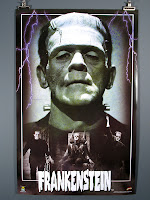 First, Frankenstein is actually the last name of the main character Victor. Victor created the creature we know to be "Frankenstein". Secondly, the creature is not green. I found how Victor put the creature together very interesting; putting different body parts together is a creative way to go about his project. This simply means the creature is just patched together, making it seem like he has scars everywhere. Possibly the most surprising fact is that the creature is actually really smart. He speaks fluently and has a developed thought process.
This provides a substantial idea for the rest of the novel. Knowing that the creature is this smart and understands exactly what Victor thinks of him foreshadows how the novel will continue. From the content of their conversation, we know that Victor will not be kind to the creature, leading the creature to hurting Victor's "fellow yellow-creatures", therefore becoming "the author of your own speedy ruin."Obviously peace will never come to the characters, and the novel will continue as it has began as a sad, tragic story.
Taylor C.
 First, Frankenstein is actually the last name of the main character Victor. Victor created the creature we know to be "Frankenstein". Secondly, the creature is not green. I found how Victor put the creature together very interesting; putting different body parts together is a creative way to go about his project. This simply means the creature is just patched together, making it seem like he has scars everywhere. Possibly the most surprising fact is that the creature is actually really smart. He speaks fluently and has a developed thought process.
This provides a substantial idea for the rest of the novel. Knowing that the creature is this smart and understands exactly what Victor thinks of him foreshadows how the novel will continue. From the content of their conversation, we know that Victor will not be kind to the creature, leading the creature to hurting Victor's "fellow yellow-creatures", therefore becoming "the author of your own speedy ruin."Obviously peace will never come to the characters, and the novel will continue as it has began as a sad, tragic story.
Taylor C.
Tuesday, October 26, 2010
Favorite Frankenstein Quote
"If, instead of this remark, my father had taken the pains to explain to me that the principles of Agrippa had been entirely exploded, and that a modern system of science had been introduced, which possessed much greater powers than the ancient, because the powers of the latter were chimerical, while those of the former were real and practical; under such circumstances, I should certainly have thrown Agrippa aside, and have contented my imagination, warmed as it was, by returning with greater ardour to my former studies."
-Victor
Chapter 2
This quote caught my attention due to its extensive amount of voice. I could really hear Victor almost smart alleckally say this. Also, it includes figurative language. They include litotes, hyperbole, and metaphor. It is as if he is blaming his father for the reason why he became involved with the alchemical sciences, instead of "natural philosophy". Its structure also caughy my eye, since it extremly long. It is also essential to the plot because if he didn't start with Agrippa he would not have moved on to other alchemist philosophies.
-Sasan
Friday, October 15, 2010
"To Be of Use" Response Blog
As I read "To Be of Use", I appreciated the value of good honest work. There is always work to be done in the world and it is up to use to determine what is meaningful to us. We need to find what makes us happy in order to grow as humans.
As my high school experience comes closer to the end, I often find myself thinking about how I want "to be of use" in the world. I often loft between studying medicine and becoming a pediatrician, or studying engineering and contributing to the advancing world around us. Who knows, maybe I'll end up studying something totally different.
From a young age I knew that I wanted to help people in some way. As a kid I wanted to be a police officer because I admired their bravery. I even considered being a firefighter. As I grew older I discovered a talent for understanding mathematics. I may decide to take advantage of this as I enter college and start to pursue a career.
For now, I have yet to decide what I want to do. All I know is that I want my future profession to be beneficial to others. I want to be remembered as someone who cares about others and is willing to work hard no matter what the task.
As my high school experience comes closer to the end, I often find myself thinking about how I want "to be of use" in the world. I often loft between studying medicine and becoming a pediatrician, or studying engineering and contributing to the advancing world around us. Who knows, maybe I'll end up studying something totally different.
From a young age I knew that I wanted to help people in some way. As a kid I wanted to be a police officer because I admired their bravery. I even considered being a firefighter. As I grew older I discovered a talent for understanding mathematics. I may decide to take advantage of this as I enter college and start to pursue a career.
For now, I have yet to decide what I want to do. All I know is that I want my future profession to be beneficial to others. I want to be remembered as someone who cares about others and is willing to work hard no matter what the task.
Monday, October 11, 2010
Blog Five: The End of Solitude Response
In William's Deresiewicz's article the "End of Solitude", Deresiewicz goes on to explain how today's society has been built upon the idea that being alone is unwanted and not comon as it used to be a generation ago.

This picture shows what is typical in today's society and now rather than our society progressing, we have regressed in a way that instead of becoming independent as individuals we have become dependent of others. Deresiewicz puts perspective to how we interact with one another and how we have evolved to always feeling like we must satisfy others before ourselves. Individuality is not valued and is not an ideal way to conduct one's self and this is what Deresiewicz finds astonishing in his observation of today's society. The "End of Solitude" gave me the realization that Deresiewicz's arguement is on point and that it isn't socially acceptable to be an individual.
-Anissa Rosales

This picture shows what is typical in today's society and now rather than our society progressing, we have regressed in a way that instead of becoming independent as individuals we have become dependent of others. Deresiewicz puts perspective to how we interact with one another and how we have evolved to always feeling like we must satisfy others before ourselves. Individuality is not valued and is not an ideal way to conduct one's self and this is what Deresiewicz finds astonishing in his observation of today's society. The "End of Solitude" gave me the realization that Deresiewicz's arguement is on point and that it isn't socially acceptable to be an individual.
-Anissa Rosales
Monday, October 4, 2010
Blog Four - Archetypes and Big Fish
We have devoted a lot of time to studying and recognizing archetypes these past few weeks in class. The movie we watched in class, Big Fish, contains tons of archetypes, many of which are easily understood and recognizable.
The most common archetype in this film is, as the title suggests, a big fish. A fish resembles divine creation and life, while the big size of it shows that it has an important role in this world. As we view the film, we learn that Edward Bloom becomes the big fish he always sought after. He had an important role in the world, greatly affecting those around him. In certain parts of the film, bones are scattered across the ground, representing the mortality of humans and reminding us that we must continue pressing forward in the life cycle eventually going through that transition from mortality here on earth to immortality in the next life in heaven. During the story of his death, we learn that he is dropped into a river and becomes the big fish. Rivers represent heaven, a transition in the life cycle, and continuous life. While he himself dies and passes on to heaven, his life continues as the river through his stories. Edward Bloom lives on and his son carries on the intriguing stories and lessons of his life.
Not only are countless archetypal symbols such as the big fish, river, darkness, forest, and choosing between split roads depicted, but other aspects of archetypes are also evident in the film. We see examples of archetypal characters such as the hero and the soul mate. Edward Bloom takes on the role as an archetypal hero. In all of his adventures he depicts himself as larger than life, from being the hero that saved his small town of Ashton from what they thought to be a monstrous giant, to successfully retrieving the top secret files in WWII. He is always achieving things which many feel are extraordinary and quite implausible if not completely impossible.
Just as the archetypes of “Big Fish” supply so much more meaning to the film, which otherwise would have been a jumble of random entertaining stories, they can supply much more meaning to any other piece of literature they are in. With archetypes, we are able to look deeper and discover new meanings created with each new archetypal symbol or idea introduced.
- Chad L.
Monday, September 27, 2010
Blog Three-Texting Can Be Literature too?!
I'm curious to see how many people had trouble we our activity last week of translating "Ulysses" into texting language. I know I had trouble with it. I've never really use abbreviations in my text messages--I usually write complete sentences with proper grammar, proper spelling, and all. Maybe it is just my type-A personality. Regardless, translating "Ulysses" into such condensed symbols was difficult for me.
Mrs. Elliott mentioned that according to some scholars, text language was used in literature during the Victorian period. Though its use is quite different today, text language is becoming very influential on our society. Now when you walk through the C-building hallways, you hear people yell "OMG!" in response to a surprising story their friend told them. In other words, texting language truly is becoming a language. According to some, it is becoming "a new genre" (Yukiko Nishimura, UC Davis professor). But although text language may be creating a new language, it may be destroying the English language as well. So the question arises: "Would email and texting together destroy the power of written language and literature?" Although texting is far from literature, it remains written language. However, with the growth and expansion of technology, I believe that the common interest in reading and literature is disappearing. For me, the only time I am able to read a good piece of literature is in school. I have too many extracurriculars and I don't have much time on my hands. In other words, I can only read literature when I am forced to for a class. But for others who do have time to read, texting and computers and technology in general could be a distraction from reading Alice in Wonderland or another piece of literature. I believe that texting is creating a language and destroying one. While creating a new and unique language, it reflects our lifestyle as Americans--we want things done easy and we want them done quick. And with the rapid growth of technology, texting and email have taken over our lives. My parents don't recieve a newspaper anymore because they can read all of the articles online. The only letters we recieve to our house are invitations, magazine subscriptions, and all of the pamphlets random colleges from the Northeast send to me (not to mention, I get emails from them, too). I think that as technology continues to grow, we will see the return of texting as literature similar to how it was in the Victorian period.
-Shelby F.
Mrs. Elliott mentioned that according to some scholars, text language was used in literature during the Victorian period. Though its use is quite different today, text language is becoming very influential on our society. Now when you walk through the C-building hallways, you hear people yell "OMG!" in response to a surprising story their friend told them. In other words, texting language truly is becoming a language. According to some, it is becoming "a new genre" (Yukiko Nishimura, UC Davis professor). But although text language may be creating a new language, it may be destroying the English language as well. So the question arises: "Would email and texting together destroy the power of written language and literature?" Although texting is far from literature, it remains written language. However, with the growth and expansion of technology, I believe that the common interest in reading and literature is disappearing. For me, the only time I am able to read a good piece of literature is in school. I have too many extracurriculars and I don't have much time on my hands. In other words, I can only read literature when I am forced to for a class. But for others who do have time to read, texting and computers and technology in general could be a distraction from reading Alice in Wonderland or another piece of literature. I believe that texting is creating a language and destroying one. While creating a new and unique language, it reflects our lifestyle as Americans--we want things done easy and we want them done quick. And with the rapid growth of technology, texting and email have taken over our lives. My parents don't recieve a newspaper anymore because they can read all of the articles online. The only letters we recieve to our house are invitations, magazine subscriptions, and all of the pamphlets random colleges from the Northeast send to me (not to mention, I get emails from them, too). I think that as technology continues to grow, we will see the return of texting as literature similar to how it was in the Victorian period.
-Shelby F.
Subscribe to:
Posts (Atom)